Bio

I am a Research Assistant at Memorial Sloan Kettering studying how inflammatory history, aging, and treatment reshape immune and tissue states over time. My imaging-focused work uses quantitative clinical imaging and radiobiology to extract host phenotypes and relate them to immune, genomic, treatment, and outcome data. I also use single-cell and spatial transcriptomics, bulk RNA, proteomics, and microbiome data to study regulatory and tissue-state dynamics.

I received my M.S. in Bioinformatics from Johns Hopkins University, where I defended StageBridge: Niche-Conditioned Regulatory Transport in Premalignant Epithelial Progression. I modeled how tissue context shapes regulatory state transitions during epithelial progression using spatial and single-nucleus transcriptomics, transcription factor activity, and gene regulatory networks.

Across these problems, I use interpretable deep learning and probabilistic modeling to infer latent biological states from sparse, heterogeneous observations. I am especially interested in biological memory, cell-state transitions, and which computational ideas transfer across modalities, where they break down, and what can be inferred from incomplete data.

Education

M.S. in Bioinformatics

2024 - 2026
Johns Hopkins University, Krieger School of Arts and Sciences

Completed August 2026. GPA: 4.0.

Master’s thesis: StageBridge: Niche-Conditioned Regulatory Transport in Premalignant Epithelial Progression.

Modeled how tissue context shapes regulatory state transitions during epithelial progression using spatial and single-nucleus transcriptomics, transcription factor activity, and gene regulatory networks.

Advisor: Christopher Bradburne, PhD, Department of Genetic Medicine, Johns Hopkins University School of Medicine.

Selected coursework: Systems Biology; Epigenetics, Gene Organization & Expression; Cellular Signal Transduction; Advanced Genomics & Genetics Analyses; Algorithms for Bioinformatics; Advanced Applied Machine Learning; Deep Learning Using Transformers.

B.A. in Biochemistry, Minor in Mathematics

2019 - 2023
Yeshiva University

Summa Cum Laude, GPA 3.9. J&J Schottenstein Honors Program.

Honors thesis: Investigating the Role of MMP14, B7-H3, PTK7, and LRRC15 in Head and Neck Cancers: Implications for Antibody-Drug Conjugates.

A.A. in Jewish Studies

2017 - 2023
Isaac Breuer College, Yeshiva University

GPA 3.93.

Experience

Research Assistant, Advanced Computing and Oncology Laboratory

Aug 2026 - present
Sloan Kettering Institute, Memorial Sloan Kettering Cancer Center

Drive quantitative study design and computational strategy across translational studies of tumor-host interactions, immune state, treatment response, toxicity, and lung-cancer outcomes.

  • Develop imaging-centered analyses integrating quantitative CT, radiation exposure, tumor genomics, circulating tumor DNA, immune profiling, and longitudinal clinical outcomes.
  • Conceived and developed HostBio / Comp-MRF, a scan-adaptive probabilistic framework for interpretable host-tissue composition from routine CT.
  • Lead analyses linking thymic and body-composition phenotypes with peripheral immune profiling, cytokines, tumor genomics, treatment response, toxicity, and survival.
  • Develop interpretable deep-learning and longitudinal imaging approaches for thoracic imaging and patient-level trajectory analysis.
  • Build reusable computational infrastructure for cancer genomics, imaging, and reproducible translational research.

Graduate Research Assistant, Advanced Computing and Oncology Laboratory

Mar 2025 - Jul 2026
Sloan Kettering Institute, Memorial Sloan Kettering Cancer Center

Conducted computational and translational research while completing the M.S. in Bioinformatics at Johns Hopkins University, with work spanning quantitative imaging, systems immunology, cancer genomics, and multimodal clinical analysis.

Medical / Laboratory Assistant

2023 - 2024
The Center for Skin Surgery, Cornwall, NY

Supported Mohs micrographic surgery workflow, clinical documentation, tissue handling, and dermatopathology preparation for squamous and basal cell carcinoma cases.

  • Prepared frozen tissue sections and H&E-stained slides.
  • Assisted with immunohistochemistry-associated workflows and surgical pathology review preparation.

Honors Thesis Research

Jan - Jul 2023
Department of Biology, Yeshiva University

Developed a surfaceome-constrained multi-omic target-discovery analysis for head and neck squamous cell carcinoma.

  • Integrated TCGA, CPTAC, GEO, and protein/localization resources to evaluate transcriptomic expression, proteomic evidence, tumor selectivity, immune context, and therapeutic feasibility.
  • Prioritized candidate antibody-drug conjugate targets including B7-H3, MMP14, PTK7, and LRRC15.

Research Assistant

2019
Bruckner Oncology, Bronx, NY

Built and maintained a clinical oncology research database, performed retrospective survival analyses, and contributed to peer-reviewed studies of prognostic factors and treatment outcomes in gastrointestinal cancers.

Selected research

Selected work spanning quantitative imaging, systems immunology, regulatory biology, and inference of dynamic biological processes from sparse human observations.

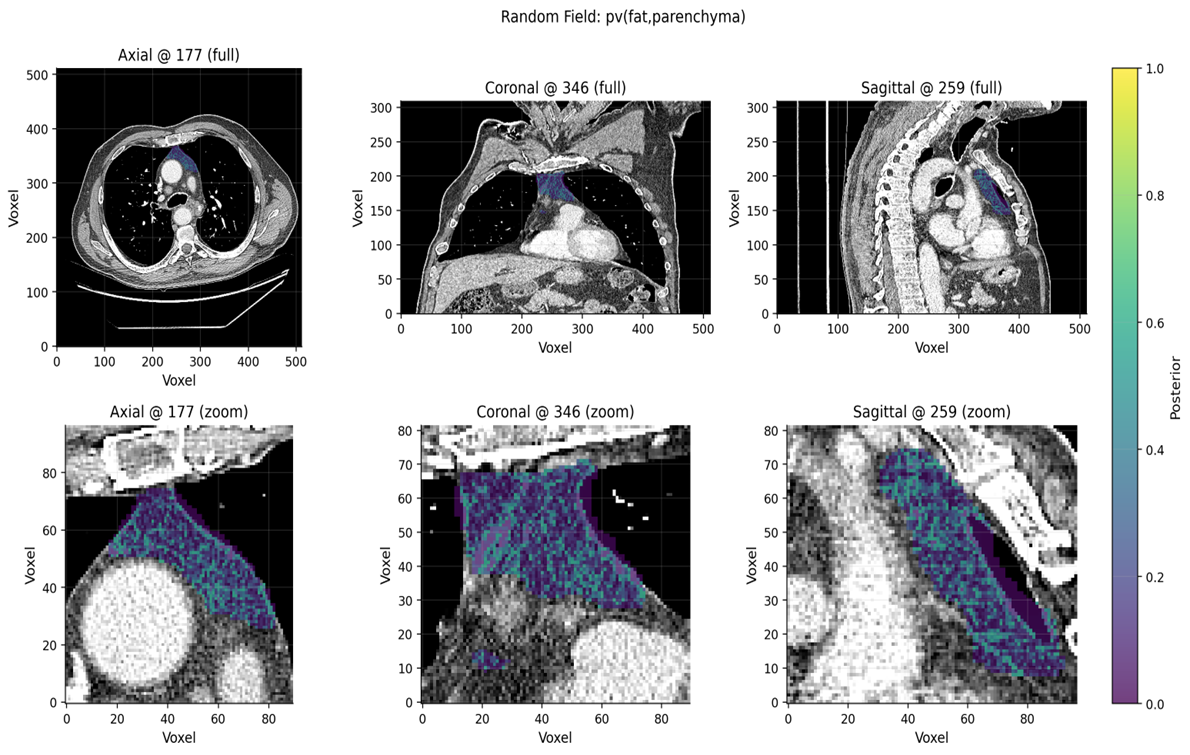
Axial, coronal, and sagittal thoracic CT views showing voxel-level posterior estimates of thymic fat and parenchymal tissue composition from Comp-MRF.
Voxel-level posterior mapping of thymic tissue composition from routine thoracic CT.

HostBio / Comp-MRF

Routine clinical scans contain information about host tissue state, but acquisition variability and partial-volume effects complicate biological interpretation.

My contribution. I conceived a scan-adaptive probabilistic framework for quantifying interpretable host-tissue composition using partial-volume mixture modeling, spatial regularization, nuisance-component handling, and within-scan reference tissues. I apply these phenotypes to studies of immune state, tumor genomics, treatment response, toxicity, and outcomes.

Status. Active MSK research platform supporting multiple lung-cancer cohorts and translational studies.

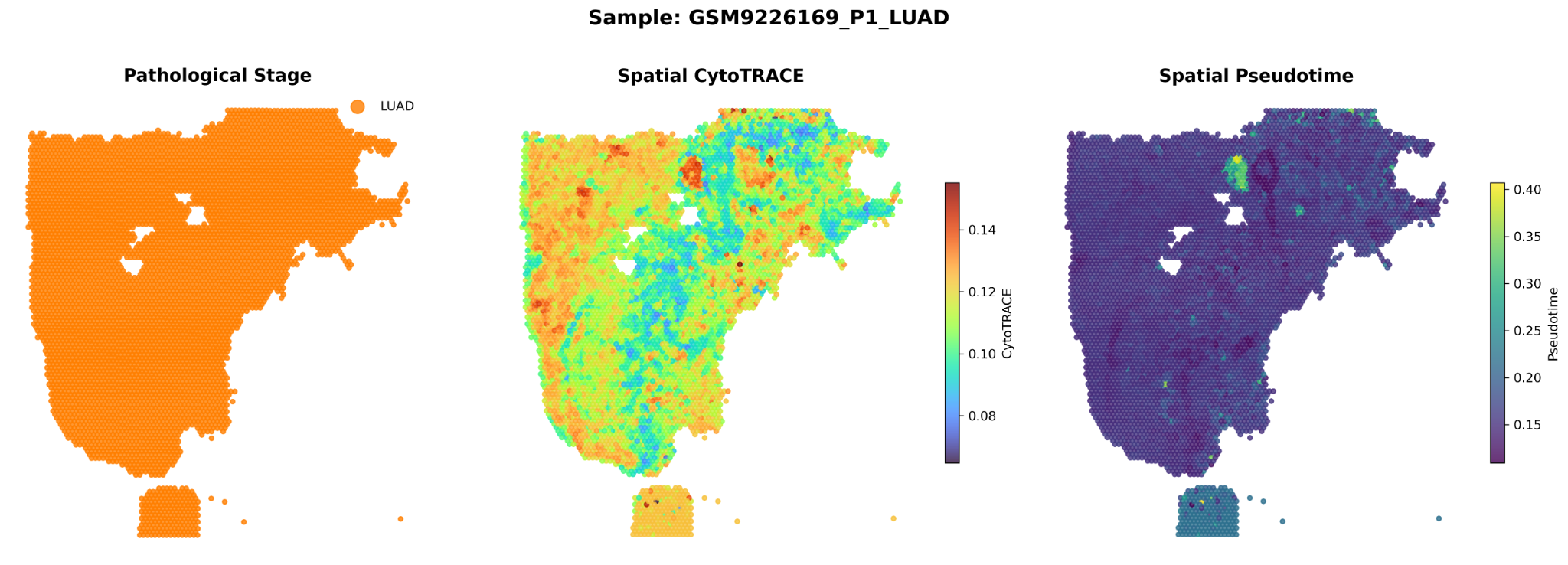
Three spatial transcriptomics panels showing pathological stage, spatial CytoTRACE, and spatial pseudotime for a lung adenocarcinoma sample.
Spatial state structure used to study premalignant epithelial progression and regulatory transitions.

StageBridge

Human disease progression is dynamic, but tissue data are usually sparse and cross-sectional, making regulatory transitions only partially observable.

My contribution. For my M.S. thesis, I modeled how local tissue context shapes regulatory state transitions during premalignant epithelial progression using spatial and single-nucleus transcriptomics, transcription factor activity, gene regulatory networks, and context-conditioned transport.

Status. M.S. thesis defended at Johns Hopkins University; methodological and biological follow-up is ongoing.

Presentations

Selected scientific presentations and accepted conference abstracts.

StageBridge Resolves Inflammatory-Stromal Transition Niches in Lung Adenocarcinoma Progression - Poster presentation, Center for Tumor Immune Systems Biology Symposium, Sloan Kettering Institute, 2026. Abraham J. Book, Jung Hun Oh, Anish K. Simhal, Joseph O. Deasy, Erhan Guven, Tafadzwa L. Chaunzwa, Christopher Bradburne.
CT-Based Integrated Body Phenotyping Captures Host Susceptibility to Radiation Pneumonitis in Locally Advanced NSCLC - Accepted abstract, IASLC World Conference on Lung Cancer, 2026.
CT-Derived Host Immuno-Metabolic Phenotyping Predicts Response to Neoadjuvant Chemoimmunotherapy in Resectable Locally Advanced NSCLC - Accepted abstract, IASLC World Conference on Lung Cancer, 2026.
CT-Derived Multi-Organ Host Phenotyping of Never-Smoking Women with Lung Cancer - Accepted abstract, MSK Cancer Engineering Symposium, 2026.

Publications

Peer-reviewed research articles, reviews and correspondence, preprints, current manuscripts, and published meeting abstracts.

  • Thymic Composition Predicts Radiation Pneumonitis in Locally Advanced NSCLC
  • Chaunzwa TL, Krishnan G, Book AJ, Miller DG, Amoako-Boadu K, Garomsa B, Meng YJ, Yang E, Ma J, Chidi A, Gomez DR, Shaverdian N.
    Journal of Thoracic Oncology. 2026;103949. doi:10.1016/j.jtho.2026.103949.
  • Critical Role of Keratinocytes and Protease-Activated Receptor 2 in Secondary Lymphedema Development
  • Park HJ, Pal S, Chen X, Shin J, García Nores GD, Baik JE, Stull-Lane A, Book AJ, Clement CC, Encarnacion EM, Klang MG, Riedel E, Chaunzwa TL, Hespe GE, Santambrogio L, Coriddi M, Dayan JH, Mehrara BJ, Kataru RP.
    Clinical and Translational Medicine. 2026;16(6):e70682. doi:10.1002/ctm2.70682.
  • Cholangiocarcinoma, Sequential Chemotherapy, and Prognostic Tests
  • Bruckner HW, De Jager R, Knopf E, Bassali F, Book AJ, Gurell D, Nghiem V, Schwartz M, Hirschfeld A.
    Frontiers in Oncology. 2024;14:1361420. doi:10.3389/fonc.2024.1361420.
  • Actionable Tests and Treatments for Patients with Gastrointestinal Cancers and Historically Short Median Survival Times
  • Bruckner HW, Bassali F, Dusowitz E, Gurell D, Book AJ, De Jager R.
    PLOS ONE. 2022;17(11):e0276492. doi:10.1371/journal.pone.0276492.
  • From Stasis to Systematics: Deciphering the Pathophysiology of Secondary Lymphedema Through Omics
  • Stull-Lane AR, Chen X, Book AJ, Kratchmarov R, Pal S, Shin J, Ashokan G, Hespe GE, Mehrara BJ, Kataru RP.
    Frontiers in Immunology. 2026;17:1850725. doi:10.3389/fimmu.2026.1850725.
  • Enhancing Toxicity Reporting with Objective Measures and Contemporary Tools
  • Bruckner HW, Knopf E, Book AJ, De Jager R.
    JCO Oncology Practice. 2025;21(12):1891–1892. doi:10.1200/OP-25-00139.
  • Thymus Composition, Disease Control, and Toxicity in Locally Advanced Lung Cancer
  • Chaunzwa TL, Book AJ, Garomsa B, Meng YJ, Yang E, Krishnan G, Chidi A, Kim R, Ma J, Riely GJ, Huang J, Simone CB, Shaverdian N, Gomez DR.
    medRxiv. 2025. doi:10.1101/2025.10.20.25338395.
  • Mechanistic Modeling and Machine Learning Identifies Optimum Radiotherapy Schedules to Prevent Treatment-Induced Metastasis
  • Graser CJ, Zhou Z, Schürch M, Moorhead G, Chaunzwa TL, Book AJ, Dean J, Lin C, Dean JA, Gomez D, Kozono D, Lahav G, Michor F.
    bioRxiv. 2025. doi:10.1101/2025.07.02.662373. Manuscript also under review.
  • CT-Derived Thymic Involution Is Associated with a Peripheral CD8+ Inhibitory-Receptor Phenotype and Inferior Survival in Unresected Locally Advanced NSCLC
  • Miller DG*, Chaunzwa TL*, Book AJ*, Amoako-Boadu K, Krishnan G, Wu A, Gelblum DY, Okamura YT, Kagami S-I, Rimner A, Deasy JO, Simone CB II, Gomez DR, Chaft JE, Shaverdian N.
    Manuscript under review, 2026. *Shared first authorship.
  • Mechanistic Modeling and Machine Learning Identifies Optimum Radiotherapy Schedules to Prevent Treatment-Induced Metastasis
  • Graser CJ, Zhou Z, Schürch M, Moorhead G, Chaunzwa TL, Book AJ, Dean J, Lin C, Dean JA, Gomez D, Kozono D, Lahav G, Michor F.
    Manuscript under review, 2026. Preprint: bioRxiv doi:10.1101/2025.07.02.662373.
  • CT-Derived Host Immuno-Metabolic Phenotyping Predicts Response to Neoadjuvant Chemoimmunotherapy in Resectable Locally Advanced NSCLC
  • Chaunzwa TL*, Yang E*, Book AJ*, Lee V, Krishnan G, Chitsike L, Amoako-Boadu K, Miller D, Xiong K, Meng J, Bott M, Schoenfeld A, Simone CB II, Gomez D, Chaft J, Shaverdian N.
    Manuscript in preparation, 2026. *Shared first authorship.

    Technical competencies

    Languages

    Python · R · Rust · SQL

    Modeling

    Interpretable deep learning · Probabilistic modeling · Optimal transport · Survival analysis · Statistical learning

    Biology

    Quantitative imaging · Radiobiology · Single-cell analysis · Spatial transcriptomics · Cancer genomics · Systems immunology · Regulatory biology

    Infrastructure

    Reproducible workflow systems · HPC and SLURM · Containers · Continuous integration · Provenance tracking