01

Measurement

Model how the observation is generated, including tissue mixing, sampling, preprocessing, technical nuisance, and modality-specific physics.

02

Representation

Recover latent state in a form that remains biologically interpretable enough to compare, test, and challenge.

03

Validation

Ask whether the representation survives held-out data, orthogonal measurements, alternative assumptions, negative controls, and identifiability checks.

Selected research

Current projects

Each project starts from a different measurement system, but the same standard applies: the computational representation should earn its biological interpretation.

Method development · MSK

HostBio / Comp-MRF

Can routine CT become a quantitative measurement of host tissue state?

I developed a scan-adaptive probabilistic framework for tissue composition that explicitly handles partial-volume mixing, spatial dependence, nuisance components, and within-scan references. HostBio-derived thymic phenotypes have now been evaluated across 1,078 patients in four independent NSCLC cohorts, including randomized RTOG-0617, using immune, genomic, treatment, toxicity, response, and survival data.

1,078 patients · 4 cohorts · randomized trial data · MSK implementation

HostBio research story →
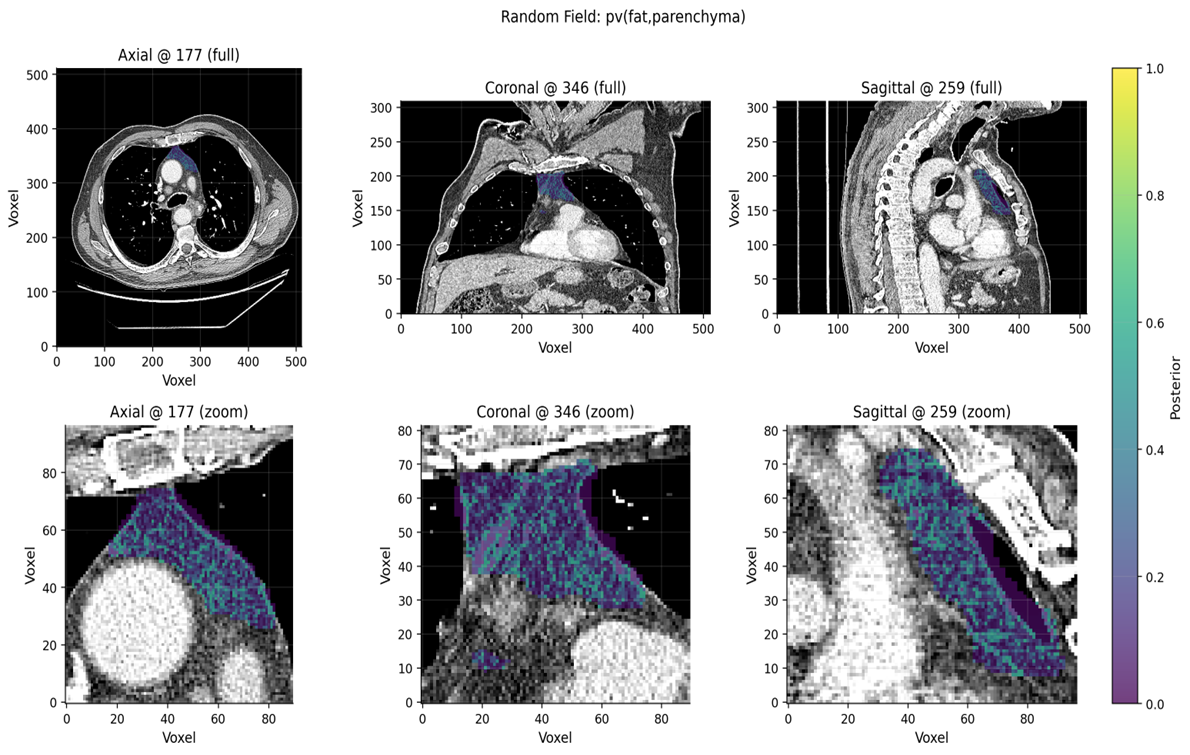
Thoracic CT views showing voxel-level posterior estimates of thymic tissue composition from HostBio Comp-MRF

M.S. thesis · Johns Hopkins

StageBridge

What can cross-sectional human tissue legitimately tell us about progression?

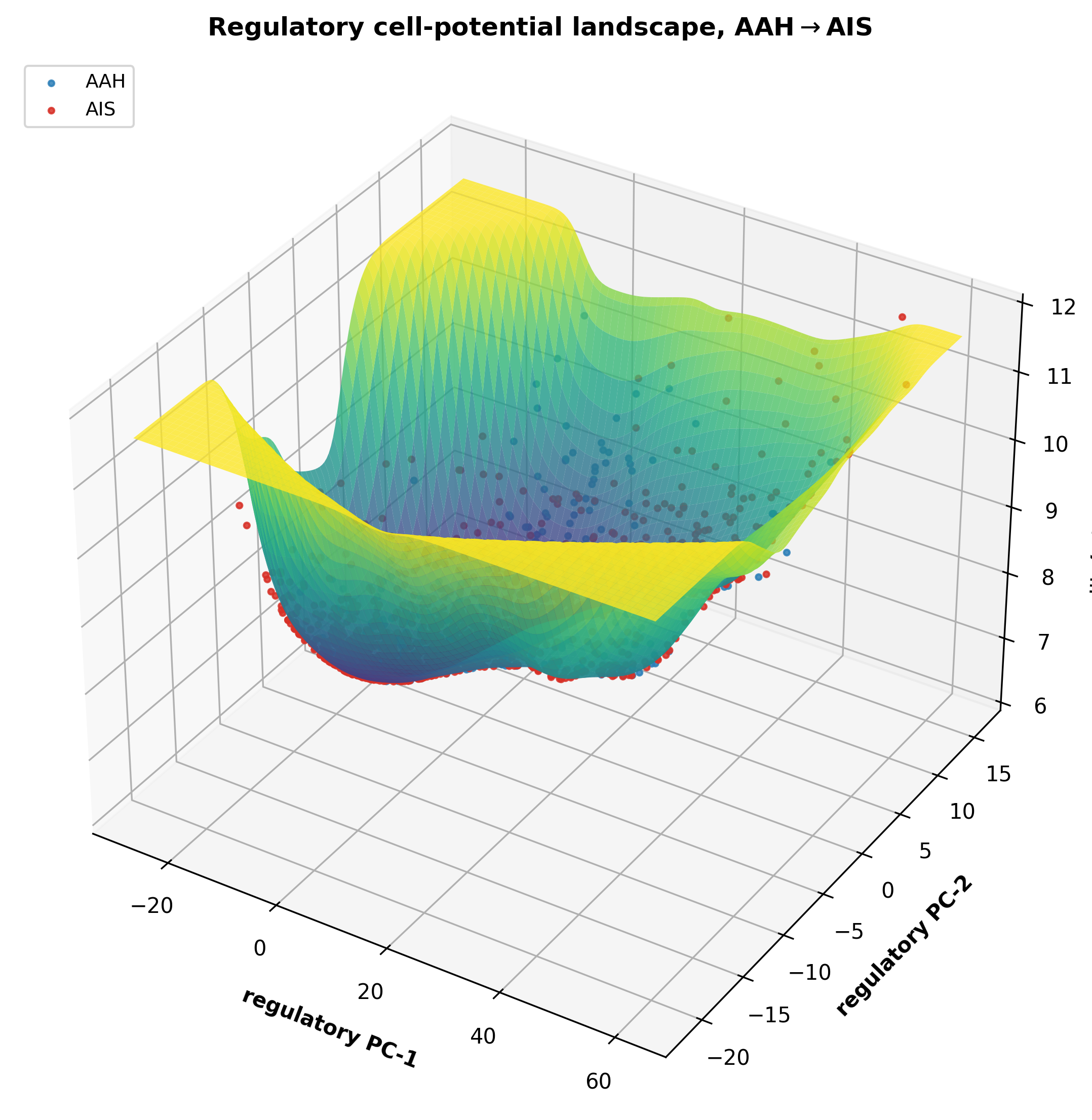
StageBridge represents regulatory state using transcription-factor and pathway activity, gene regulatory structure, and tissue context. A hidden recoverability failure forced a redesign from context-neutral to conditional transport, improving transition recovery from 0.27 to 0.84. In an external PanIN setting, the framework returned a calibrated null rather than forcing a progression signal.

0.27 → 0.84 recoverability · donor holdout · external calibrated null

StageBridge research story →
StageBridge regulatory landscape over premalignant epithelial states
Model-supported regulatory-field geometry over observed AAH/AIS epithelial states. Click to explore StageBridge.

Published collaborative research · MSK

Secondary lymphedema

How do persistent inflammatory and epithelial programs contribute to chronic lymphatic disease?

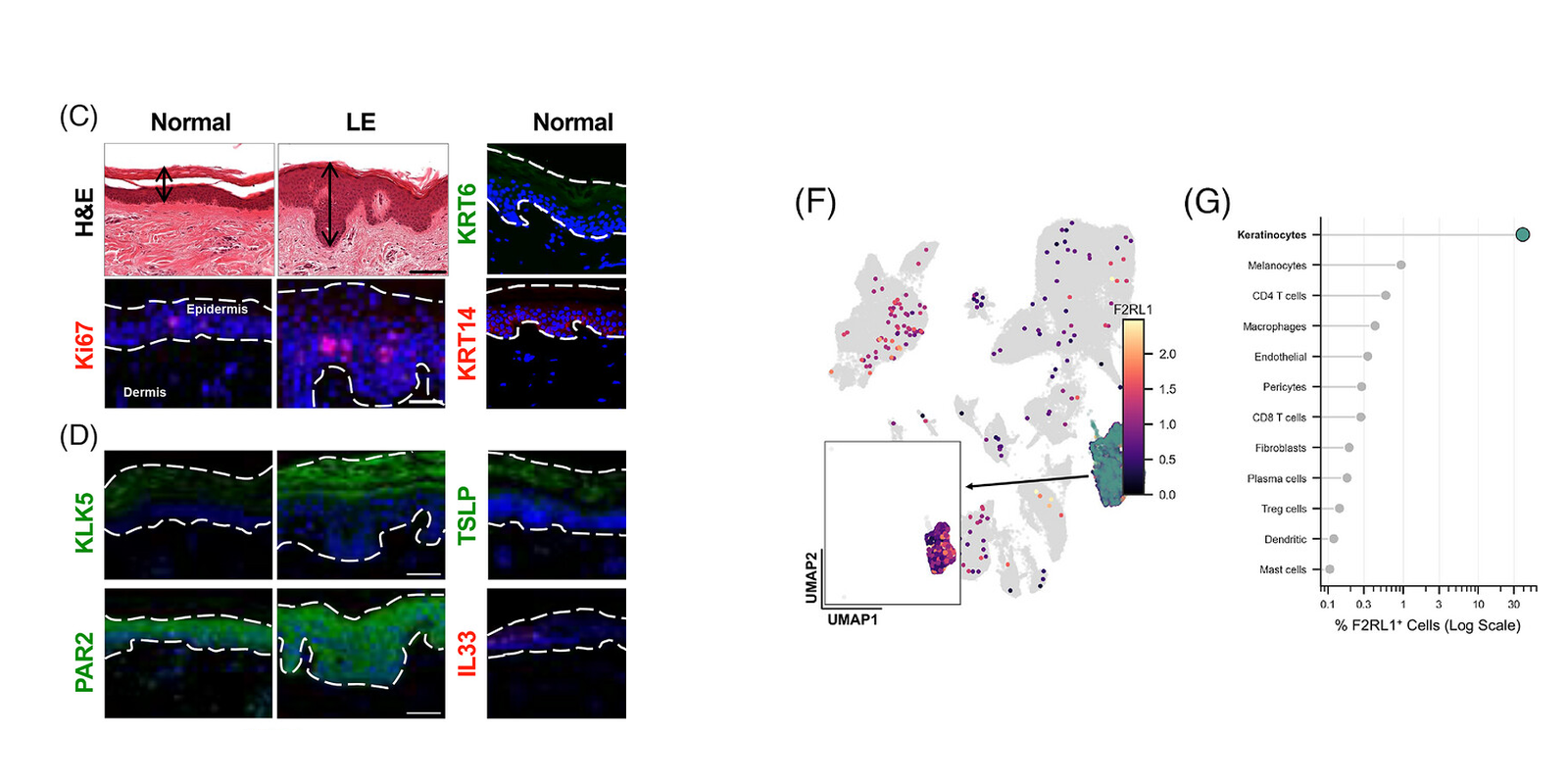
My public work with the Mehrara laboratory includes a peer-reviewed study of keratinocyte and PAR2 biology in secondary lymphedema and a peer-reviewed review synthesizing systems-level and omics approaches to disease pathophysiology.

Clinical and Translational Medicine · Frontiers in Immunology · 2026

Published lymphedema work →
Published secondary lymphedema figure showing epidermal inflammatory remodeling and cell-specific PAR2 biology
Published secondary lymphedema research. Adapted from Park et al., Clinical and Translational Medicine (2026), CC BY 4.0.

Additional work

Methods and collaborations

Full CV →

AI and deep learning for thoracic imaging

Training and deployment support for nnU-Net v2 thymus segmentation and evaluation of pretrained Sybil lung-cancer risk predictions in 77 women, where predicted risk separated cancer cases from controls across all six prediction horizons.

Longitudinal imaging and dynamic prediction

Serial cone-beam CT, radiomics, tumor geometry, longitudinal-survival modeling, and dynamic prediction, including the MSK clinical-imaging arm of a collaborative mechanistic-modeling study of radiation-induced tumor migration and treatment scheduling.

Cancer genomics and reusable infrastructure

COSMIC-IMPACT and related workflows for MSK-IMPACT tumor sequencing, MSK-ACCESS longitudinal ctDNA, somatic alterations, clonality, mutational signatures, and reproducible multimodal analysis.